
Transport Australia calls for national road funding reform as excise model reaches tipping point
Share this article


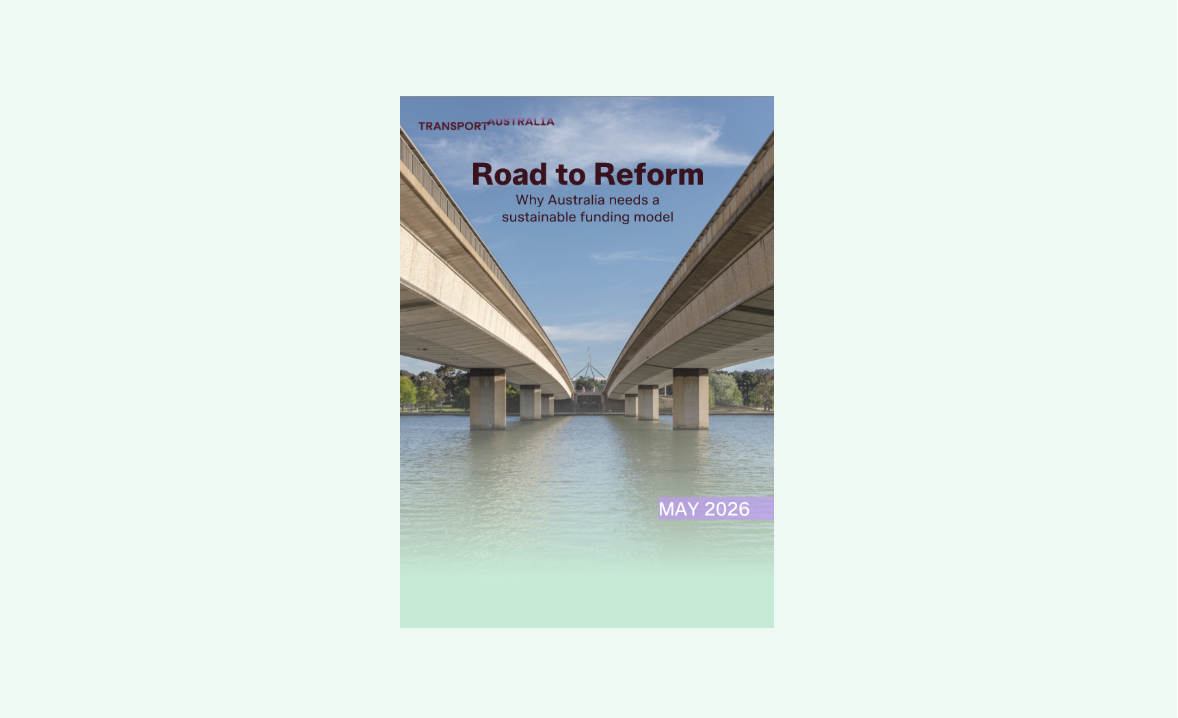
Australia has the technology, public support and international evidence to replace the fuel excise with a fairer road user charging model, according to a new Transport Australia paper to be released at this week’s Transforming Transport Summit in Melbourne.
Transport Australia’s paper, The road to reform: Why Australia needs a sustainable funding model argues Australia can no longer rely on a declining fuel excise as a revenue source for road maintenance to support a growing population, supply chains and a high-performing national transport network.
The paper calls for the Federal Government to expedite development of a nationally harmonised road user charge framework this term of government, in close cooperation with states and territories.
Transport Australia says the reform should be designed around fairness, transparency, privacy, customer choice and clear community benefit, including a direct link between revenue raised and investment in better roads. Transport Australia CEO Ehssan Veiszadeh said roads are essential to daily life and the economy, and the debate had moved beyond whether Australia needed reform.
“Fuel excise was designed for a different vehicle fleet and a different economy. As vehicles become more efficient and more Australians shift to electric and hybrid vehicles, the revenue base that helps maintain our roads will continue to decline.
“The question is no longer whether Australia needs a new funding model. The question is how we design one that is fair and nationally consistent.
Transport Australia research shows Australians understand the need for reform, particularly when it is linked to better roads, better maintenance and a more transparent system.
“This is not about creating a new burden on households. It is about replacing an outdated model with one that reflects how people use the network and ensures all road users make a fair contribution,” Mr Veiszadeh said.
According to a national survey, 59 per cent of Australians support replacing fuel excise with a per-kilometre road user charge, rising to 71 per cent among EV and hybrid drivers. It also found 78 per cent of Australians are concerned about inadequate road maintenance, with support increasing when road user charge revenue is dedicated to road investment.
The paper finds the technology required to implement road user charging already exists, including connected vehicles, on-board units, telematics and mobile apps. It recommends Australia adopt a multi-technology approach, allowing users choice and enabling the market to determine which solutions work best for different vehicles and use cases.
The paper will be released at Transport Australia’s Transforming Transport Summit: Connecting Communities, Powering the Economy, to be held at Crown Melbourne on Thursday 7 May.
The Summit will bring together senior government and industry leaders to examine the future of Australia’s transport system, including how to improve network performance, safety, sustainability, funding and productivity.
A dedicated Summit session will examine road user charging, fairer funding models and social licence. Speakers include Tim Pallas, former Treasurer of Victoria, who brings lessons from the first real attempts at road user charging in Australia, Transurban CEO Michelle Jablko, who will give insights into the link between funding and performance, and Angus McDonald who will help connect policy and practical implementation.
Mr Veiszadeh said sustainable funding was now central to Australia’s productivity challenge. “Transport underpins almost every part of the economy,” he said. “When the network is reliable, freight moves faster, workers get time back, businesses are more productive and communities are better connected.”
ENDS
For media comment and requests please contact
Katherine Danks
0416 206 961
media@transportaustralia.org.au